
Humanitarian Aid

Client Goal
- Emergency relief for vulnerable populations in Yemen and Syria Food and nutritional supplementation for babies, sanitation and hygiene products, kitchenware, and clothing
Determine
compliance and impact
Evaluation
A combination of on-the-ground site visits, interviews with beneficiaries and stakeholders, and document review to determine compliance and impact.
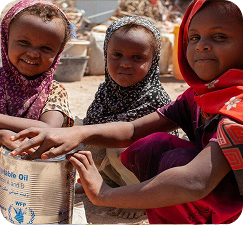
As part of its continuing mission to provide humanitarian relief around the world, the Church of Jesus Christ of Latter-day Saints (the Church) partnered with Evaluasi to conduct an evaluation of Rahma Worldwide’s (Rahma) 2022 distribution of humanitarian aid in Yemen. The Church primarily sought to determine whether Rahma had complied with terms of their agreement with the Church and had spent funds in accordance with that agreement. Secondarily, the Church sought to assess the efficacy of Rahma’s distribution and identify ways to improve future distributions. This document summarizes our findings.
Overall, we find that Rahma is highly compliant with the terms of their agreement with the Church and have demonstrated that they are qualified to receive aid for future projects. We conducted 50 interviews with Rahma staff, beneficiaries, and local stakeholders and also reviewed Rahma’s internal financial and technical documents. We found no evidence to suggest that their reporting to the Church was erroneous and found substantial evidence corroborating those reports. Per the Church’s direction, we did not conduct a comprehensive review of all the work Rahma completed. Despite this planned limitation to scope, we are confident that Rahma executed the 2022 humanitarian distribution efficiently, effectively, and in accordance with the Church’s ethical, financial, and technical expectations. The table below summarizes our findings for each of the Church’s Short-Term Results Scorecard, along with data sources and justifications for those conclusions. More detailed discussion can be found in the full report.
Conclusions
Our most important conclusion is that Rahma has demonstrated that they are capable of dispersing funds effectively, efficiently, and in good faith. There are several ways in which Rahma could improve their implementation. We detail these recommendations in the full report. Key questions the Church should consider include:
How can Church partners improve upon their needs assessment processes to produce less biased beneficiary selection criteria?
- How can Church partners diversify the sources of their information on potential beneficiaries such that they rely less on local authorities?
- What systematic beneficiary identification methodologies exist that the Church could explore with its partners?
.
How can Church partners improve the process by which they verify the distribution of goods to eligible beneficiaries?
Are there any biometric approaches (fingerprint verification, for instance) that could provide more accurate confirmation of beneficiary selection and receipt of goods?
How can the Church work with its partners to shift its approach to more sustainable interventions?
How can the Church employ cost/benefit analysis to determine which approaches produce the most effect over time?
In the future, how can the Church evaluate the causal impact of its efforts on beneficiaries and their communities?
How can the Church employ cost/benefit analysis to determine which approaches produce the most effect over time?
Past Performance
Nutrition Aid
Conducting 20 evaluations of several nutrition interventions for mothers, children, and other individuals across multiple countries and continents.
Humanitarian Aid
Evaluation of Rahma Worldwide’s (Rahma) 2022 distribution of humanitarian aid in Yemen.
Medical Services
Evaluation of individuals who had been tested for hearing loss but had not yet decided to purchase a hearing aid.
Financial Compliance
Conducted a scientifically rigorous “shadow shopping” campaign to test the regulatory compliance of international banks and trusts supervised by the CBB.
